10 strategies that helped me stop binge eating, that have nothing to do with food

I'm a dietitian so of course I harp on about how gentle shifts to your day-to-day eating can have a great impact on your bingeing. Learning to eat regularly, nourishing your body adequately, challenging food rules, honouring your hunger and finding freedom around previously forbidden foods are all important parts of recovery.
But as I reflect on my own recovery from binge eating, I can see that YES the shifts in food are important. But also, so are the bigger life things. I want to share with you some of the steps I took that helped me recover.
Ultimately, you have an entire life to live outside of what we eat, how much we weigh and what our bodies look like.
So yes, the food stuff is important. But I want you to start putting some energy into the bigger picture too, planning the life that you desperately want after binge eating recovery.
So here are ten non-food strategies that helped me in my recovery.
1. I refused to spend time with people who drained me
This was a big one.
I started paying much more attention to how I felt around people.
Did I feel good about myself after spending time with them? Did I feel accepted? Could I be myself? Or did I leave feeling inadequate, judged or like I wasn't quite measuring up?
I also became less tolerant of unsolicited comments about bodies, appearance, weight and life choices. I felt it in my deepest core that that I didn't want to spend my life bitchin' about the same topics every single week, I needed more.
I became much less interested in maintaining relationships simply because they had existed for a long time. The phrase 'friends for a lifetime, friends for a reason, friends for a season' comes to mind.
I think there's something quite liberating about realising that you don't actually have to maintain every friendship you've ever made. Some relationships have their time and place. Some people grow with you, and others don't. Some fill your cup, others drain you.
I eventually stepped away from a group of girlfriends that I knew I just didn't really gel with anymore. There wasn't a dramatic falling out. I simply recognised that it wasn't where I wanted to spend my energy.
(And they must have felt it too, because I'm pretty sure they started a new whatsapp group without me. Love & light to all!)
2. I got out of my head with travel - home and abroad, solo and with others
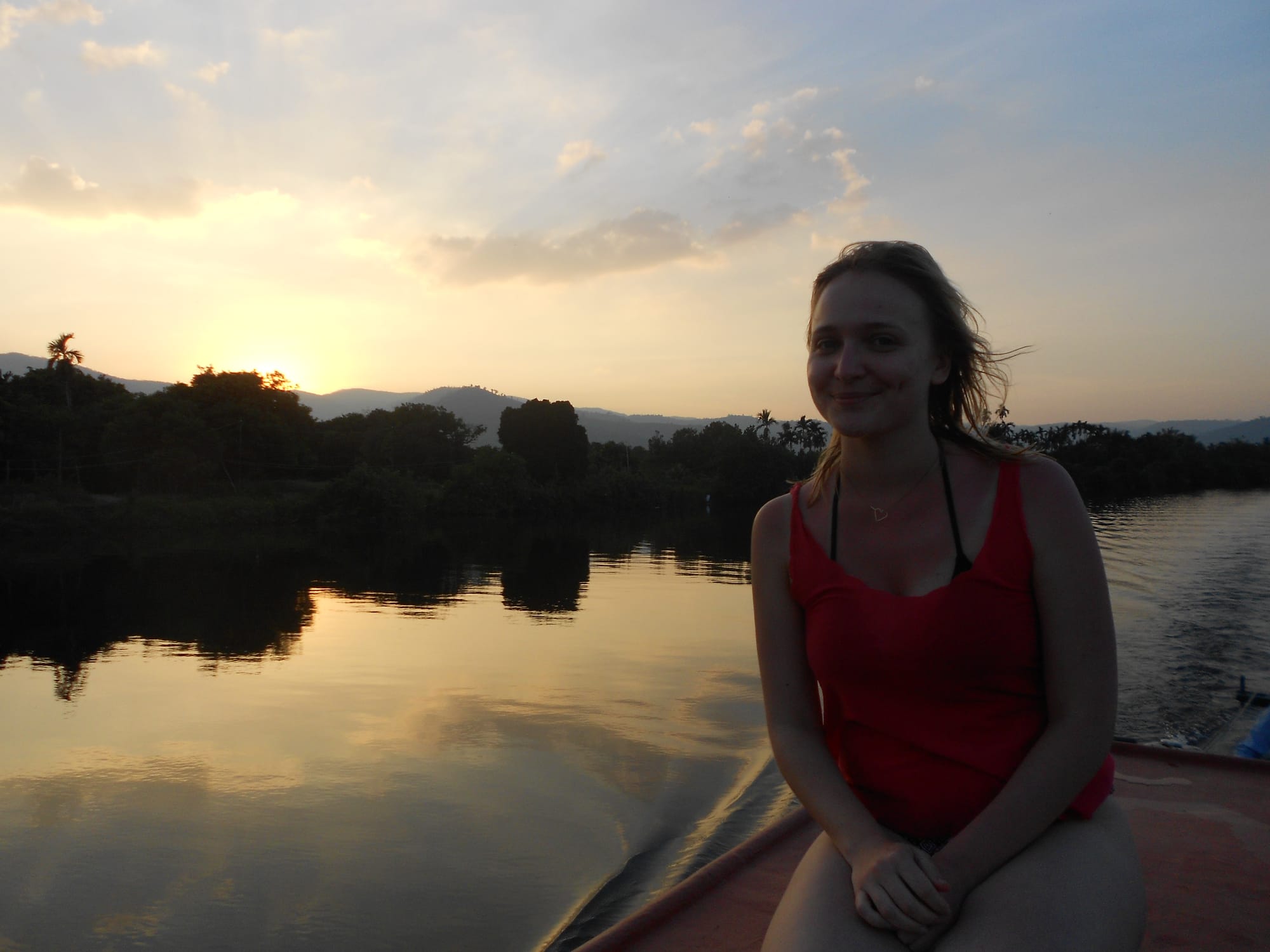
Travel has always given me perspective. There's something about stepping outside your usual environment that makes you realise just how many different ways there are to live.
You meet different people, experience different cultures, discover new places and start questioning some of the assumptions you've carried around for years.
Even exploring a different part of Ireland or taking a weekend somewhere gave me that feeling.
For me, travel became about experiencing more of the world rather than constantly focusing on myself. And that's what you need too, to get out of your own head, your own little bubble.
When you're caught up in binge eating and body dissatisfaction, your world can become incredibly small. You spend so much time thinking about food, your appearance and what you need to change that you forget there's an entire world outside of those thoughts.
3. I stopped people pleasing, and developed incredibly high standards for how people treated me
I became much more confident about having standards for myself and how I expected to be treated.
I stopped feeling that I needed to explain every decision, justify every ambition or make myself smaller to keep other people comfortable.
I became more comfortable saying no. Not all the time, but I started practising it more. I took the 'fake it until you make it' approach to this, it didn't feel right or good to say no in the beginning but I pushed myself anyway, and became awesome at it.
I don't think we talk enough about how much energy can go into trying to be the version of ourselves that other people find most acceptable. I certainly spent time doing that.
But I started realising that I had one life, and I didn't particularly want to spend it worrying about whether everybody else approved of me.
4. Controversial - I moved away from Ireland
I absolutely love Ireland. It's home, it always will be. I do miss it, especially now with raising two little ones which are fast developing their little British personas.
But I also found it difficult to grow in that cultural environment I was in.
There's a particular dynamic in some Irish communities that I've always associated with 'tall poppy' syndrome. It's challenging to put my finger on, because I have an incredibly supportive inner circle. But, I found that in Ireland, there was a general sense that others didn't actually want you to succeed.
It wasn't the only reason I moved - my now-husband-then-boyfriend felt he couldn't grow in Ireland either. So I guess we were/are in it together. It's been 9 years since I left Ireland and I can see that moving away gave me space to explore opportunities and reconsider what I wanted my future to look like.
I'm not suggesting that everybody needs to emigrate. But moving away was one of the decisions that helped me grow into a different version of myself. Sometimes a change of scenery really can change your perspective.
If you’re reading this and thinking, “I finally understand why this is happening to me, but I still don’t know what to do next…”
That’s exactly what my 1:1 Breakthrough your Binge Eating Session is for.
In 90 minutes, we’ll make sense of your binge eating, look at what might be keeping it going, and work out what you actually need to move forward — without another diet, meal plan or list of rules.
5. I made it my top priority to find work that I loved
I really struggled with working as a dietitian in the beginning. I felt like a cog in the wheel, not actually enjoying the work whatsoever. Female-dominated environments seriously have their challenges, the judgement was endless. Or at least it felt that way. I started to think about what I actually wanted from my working life.
What interested me? What was I good at? What kind of work made me feel stimulated and purposeful?
It wasn't immediately impossible to quit my job. So I started looking for the enjoyable parts of my work rather than focusing exclusively on what was difficult.
One phrase that really stuck with me was: "Find the fun in your job, and the job's a game."
I also started recognising that my career could be a source of identity, purpose, intellectual stimulation and achievement.
It didn't have to be another thing that made me feel inadequate. Finding something meaningful to work towards outside of food and body image is incredibly valuable.
6. I audited every single routine and asked... is this actually serving me? (especially 'youtube morning routines').
This was about being honest with myself.
I started questioning some of the things I was doing simply because I thought I should be doing them. The routines. The commitments. The social obligations. The expectations I'd created for myself.
Were they actually making my life better? I mentioned earlier that I stepped away from a friendship group that wasn't right for me. That was part of a bigger process of recognising that I didn't need to keep doing things simply because I'd always done them.
I also became more interested in whether my routines were sustainable.
For example, I could convince myself that waking up at 5am to journal and have a productive morning was a wonderful idea. But if I was exhausted by 4pm, was it actually a good idea.
In many cases, my strict routines were leading to binges. If I set out to wake up at 5am and go for a run, and then didn't do it or didn't run far enough, I would feel so frustrated and guilty. I'd binge, and vow to start again tomorrow.
I started questioning the idea that I needed to optimise every part of my day.
Sometimes the best thing you can do for yourself is stop doing something.
7. I stopped keeping clothes that didn't fit my body.
This is something I feel quite strongly about.
I became much more intentional about the clothes I kept in my wardrobe.
I didn't want to open my wardrobe and be confronted with a collection of clothes that represented bodies I'd previously had, bodies I hoped to have or bodies I thought I should have.
I wanted clothes that fitted me. Clothes that were comfortable.
Clothes that I actually enjoyed wearing.
So I started letting go of things that didn't fit my body as it was TODAY.
For so long, I'd associated feeling good in clothes with achieving a particular body size.
But I didn't want to keep postponing feeling comfortable until some hypothetical future date.
I wanted to get dressed in the morning and feel fabulous, and comfortable. Without a bra strap digging into my back or too-tight-underwear wrecking my head.
Buying clothes that fit my current body was finally treating my comfort as something that mattered. I deserve to feel comfortable, and look fabulous today.
8. I became obsessed with what kind of future I wanted
One of the most important shifts I made was allowing myself to imagine a future that wasn't centred around changing my body.
I started thinking about what I actually wanted from life.
Where did I want to live? What kind of career did I want? What experiences did I want to have? What did I want my relationships and family life to look like?
I started allowing myself to dream about things that had nothing to do with my appearance. When so much of your energy is directed towards either pleasing people or losing weight, stopping binge eating or finally feeling comfortable in your body, it's easy to forget that you can have ambitions and plans that exist completely independently of those things.
I started thinking about my values and what I wanted my decisions to reflect. That became something of a North Star for me. Rather than constantly asking myself how I could change my body, I started asking myself what kind of life I wanted to build.

9. I cancelled (most) exercise
I was very into running. I loved the routine, the structure and the feeling of having completed a workout.
But I also had to become much more honest about the role exercise played in my life. Was I exercising because I enjoyed it? Or because I felt I had to?
Was it about movement and enjoyment, or was it another way of managing, controlling and punishing my body? I started recognising that these things weren't necessarily the same.
I needed to move away from the idea that exercise was something I had to do to compensate for eating or to earn the right to feel good about myself.
That meant reconsidering my approach to movement and giving myself permission not to be constantly pushing my body. I think this is particularly important for anyone who has a history of disordered eating. Stepping back from exercise, rather than doing more of it, is an important part of recovery.
I wanted movement to become something that could exist in my life without being another measure of my worth. For me, that meant long walks and more recently I have introduced cycling my cargo bike - enjoyable activity and ferrying the children around, a win-win.
10. I found interests that had absolutely nothing to do with food , body or exercise
This might be my favourite one.
I started putting more energy into things that genuinely interested me. Things I wanted to learn about, talk about, explore and experience. I took up a weekly Spanish class in Dublin and loved researching courses relating to my work that genuinely sparked my interest (I never stopped doing this, and now I'm Dr.!)
When you've spent a long time thinking about food and your body, it can be surprisingly difficult to remember what else you're interested in.
Your thoughts become so repetitive.
What am I going to eat? Have I eaten too much? What will I eat tomorrow? Should I exercise? What does my body look like?
I wanted to have conversations that weren't about diets, calories, weight or appearance. And I wanted to develop parts of my identity that had nothing whatsoever to do with my body.
For me, this was part of rediscovering that there was a whole person outside of my relationship with food. Someone with interests, ambitions, opinions, passions and things to look forward to. I wanted to give that person more room.
I started with finding anything that captured my interest. True crime and airplane crash investigaton worked a treat. Now I can easily read a couple of chapters of a book without my brain drifting to thoughts about food and body.
Ultimately, I needed a bigger life.
I want to be clear that none of these ten things is a treatment for binge eating in isolation.
The food side of recovery is critical - and it is for you too. Eating regularly, eating enough, challenging restriction and addressing the psychological and emotional factors involved in binge eating are fundamental.
But I also think we can become so focused on the mechanics of recovery that we forget what we're actually recovering for. I wasn't just trying to stop binge eating.I wanted to have a life that wasn't dominated by thoughts about food and my body.
I wanted to travel, work, learn, build relationships, explore opportunities, have ambitions and experience things.
I wanted to wake up in the morning and have something interesting to think about other than what I was going to eat.
Because recovery isn't just about removing something from your life. It's about making room for everything else.
I didn't want my entire existence to revolve around food and my body. I wanted a life that was so much bigger than that.
And that's what I want for you, too.